I love testing out new sock and heel toe constructions. Even so, I don’t always want to knit an entire sock to do it. That’s why, sometimes, I just swatch the heel or toe by itself.

I’ve been doing this for a few years now, and it turns out this method has a lot of advantages. In today’s blog post, we’ll take a look at why I recommend knitters try new techniques in sock construction by swatching just a part of the sock. Then we’ll examine the scenarios where I think it’s most useful and how exactly to do it.
Swatching Sock Parts is Low Stakes
Swatching just part of a sock is an extremely low stakes way to test out a new method. There’s nothing worse than knitting an entire pair of socks, only to try them on and realize you don’t like the fit of the new heel or toe construction you tried.
In fact, the only thing I can think of that even comes close to that horror is spending hours on a large chunk of a sock, trying out a new heel or toe construction, and making a mistake that gets things so tangled up that I have to rip out the whole sock. That happened to me a lot when I was a newer knitter.
When you swatch just the heel or toe, you can try it on and make mistakes with very few consequences. Even though I firmly believe that time spent knitting is never time wasted, there are easy ways to learn a lesson and there are harder ways to learn it. I’m a big fan of learning things the easier way whenever I can.

Fewer Things to Focus On
Sometimes, when I use new techniques, I find myself so caught up in how all the pieces fit together that my attention drifts away from the new construction element I’m testing out.
When I swatch just the heel or toe, I don’t spend any extra mental energy. I am just putting my attention on this one new technique.
That can also help prevent overwhelm if you are the kind of knitter who ends up juggling too many things in their head at once.
Sometimes Doubles as a Gauge Swatch
If you are just trying out the mechanics of a new sock construction, you can also use your toe or heel as a gauge swatch for the full sock. Knitting a full heel or toe will give you a pretty good sense of your row gauge and stitch gauge for an entire sock.
Be aware that toe swatches are sometimes a little shallow for this purpose. Depending on the heel construction, you may end up with some areas of tugging that can distort the gauge, too. As a result, this method is imperfect compared to a proper gauge swatch. Still, it’s better than nothing.

When This Method is Most Useful
There are three scenarios where I think this method has a strong advantage over knitting an entire sock.
First, I think it’s a game changer for a newer sock knitters. If you’re just building your confidence with sock knitting, you’ll likely face challenges when repairing mistakes or trying new methods. Swatching just the heel or toe will allow you to build your skills in a smaller, more contained environment.
I also think this method is helpful for experienced sock knitters who are curious about a particular heel or toe construction but are skeptical that it will fit them well. For example, before I tried the Fleegle heel, I wasn’t entirely convinced that it would fit me comfortably. I have a high instep and usually use a heel flap and gusset. Short row heels fit me very badly. Before I knit full socks with Fleegle heels, I swatched just the heel to see if I liked it.
Finally, I think this method can be really useful for sock knitters who want to build their skills quickly and efficiently. Sock knitting is a slow process. If all you really want to work on is understanding different toe and heel constructions, it doesn’t make sense to spend 10 to 15 hours knitting an entire pair of socks for each heel. This method allows you to focus in on just the skills you want to develop. You don’t have to spend extra time on the skills you’ve already honed.
How to Swatch Just the Heel or Toe of a Sock
The actual mechanics of swatch, the heel or toe of a sock are pretty straightforward. I’ll walk you through the process here.
- Cast on the number of stitches you would cast on if following the pattern in its entirety.
- If you’re knitting a heel or a cuff-down toe, work 5 rounds of ribbing to prevent curling.
- If you’re knitting a heel, knit .5-1” in plain stockinette.
- Work the heel or toe as written.
- If you’re knitting a heel, knit another .5-1” in plain stockinette
- If you’re knitting a heel or a toe-up toe, work 5 rounds of ribbing to prevent curling and bind off using a stretchy bind-off.

Pro Tip: Keep and Label Your Swatches
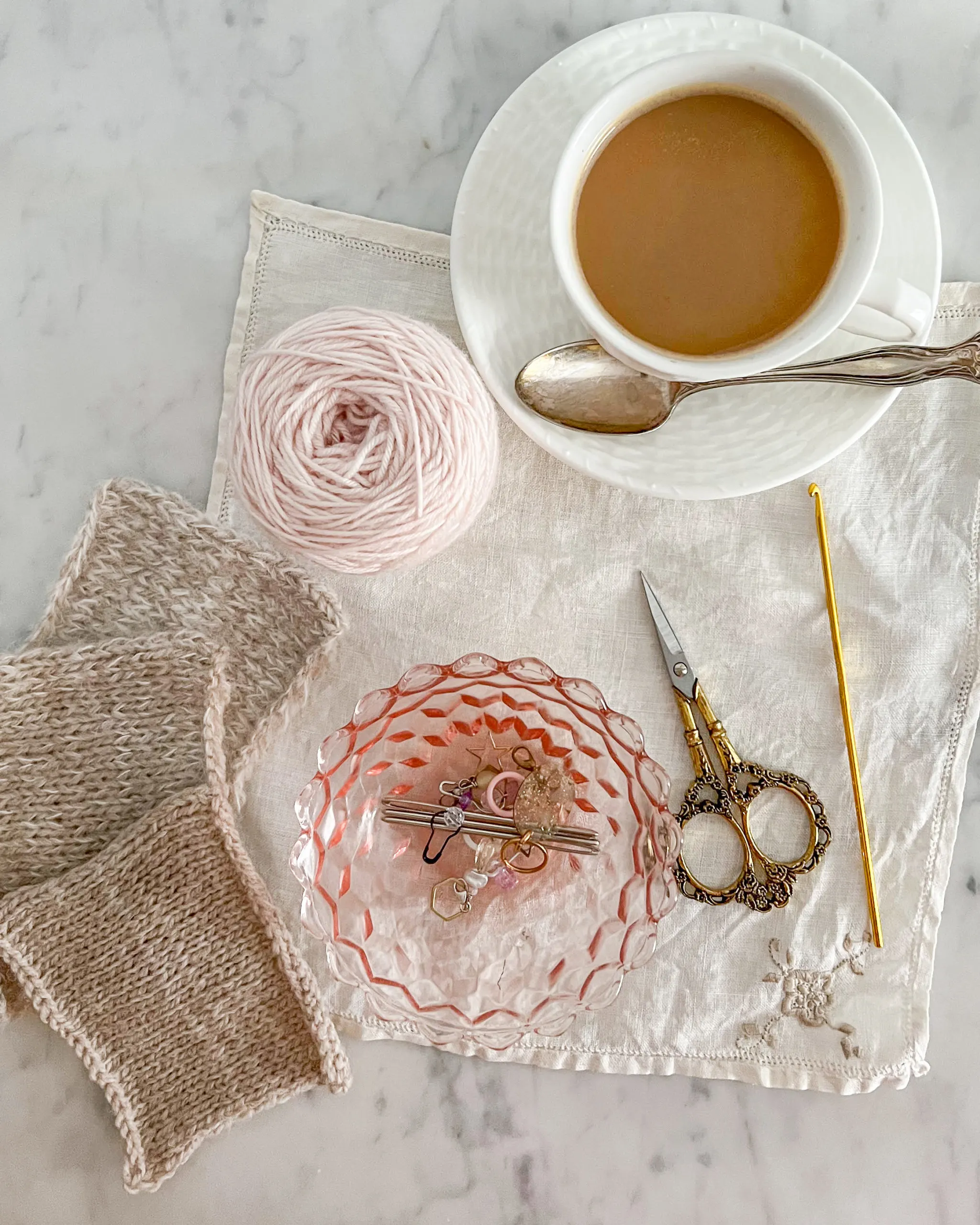
These yarn swatches use just the tiniest amount of yarn, so keeping them isn’t a waste. Having them on hand for future reference can also help you remember what these different sock construction methods are supposed to look like.
After a while, though, it can be tricky remembering which swatch tested which technique. That’s why I recommend attaching a little label to your swatches. It can be as simple as writing a note on a small piece of paper and clipping it to your swatch. Then, when you want to refer back to your work in the future, you have an easy way to do so.
Let’s stay connected!
Join my newsletter for 30% off all new releases, regular updates with helpful tips and tricks, first crack at registration for upcoming workshops, exclusive discounts, and more.
I’m on YouTube now and would love to have you join me there for regular project updates, technique tips, chats about goings-on in the knitting world, and more.
Prefer to read without ads? Join my Patreon, which starts at just $1 a month!
Join the A Bee In The Bonnet Facebook Group to participate in knitalongs and other fun community events
Come hang out with me on the A Bee In The Bonnet TikTok
Follow along on the A Bee In The Bonnet Instagram
Get inspired via the A Bee In The Bonnet Pinterest




Lauren,
Thank you a million times for this blog! I’m still learning about sock knitting and this would never have crossed my mind. You have inspired me so much with your talent and insight. I can’t wait to start swatching heels and toes. I think it would give me the confidence boost I’ve been looking for. Thank you for breaking it all down to a learnable level!
I’m so glad this post was helpful for you! Excited to see how your sock knitting journey progresses.