Over the years, I’ve met so many knitters who say they’d love to knit socks but that socks are intimidating. I get it! They are tiny little stitches on tiny little needles with tiny little yarn, and there are a couple elements in some sock patterns that you don’t see often elsewhere.

Luckily, I’ve spent a lot of time thinking about how to help knitters get comfortable knitting socks, so here are my suggestions for building those skills.
Prefer to get this information in video format? I’ve got you covered! Otherwise, read on below.
Step one: knit some hats in thicker yarn
If the thing about knitting socks that really intimidates you is tiny yarn and tiny needles, skip that part for now. Let’s work on building the other skills that you will need for sock knitting. Hats are a great way to do that, because they incorporate almost everything you will also use in a sock.
Hats have ribbing at the brim, lots of knitting in the round, and decreases to close up the crown. Those are the exact same skills you’re going to need for the cuff of the sock, most of the sock itself, and the toe. Depending on the type of heel you use, you might also need decreases for part of the heel.
For a simple, straightforward hat pattern, I always recommend my Santa Barbara Hat and my Grant Park Hat.

Step two: knit a hat with teeny tiny yarn and teeny tiny needles
Once you get comfortable with the various skills required for knitting socks, you can start getting comfortable holding the fine needles in your hands and working with the fine yarn. For this stage, I recommend knitting another hat, but just doing it with the same kind of yarn you would use for socks and the same size needles. If you end up being a magic loop sock knitter, this can be extra helpful because the size needles you’re holding in your hand will be the same as the needles that you use for the sock.
For this stage, I have a free knitting pattern that you can use to knit stockinette hats in fingering weight yarn until you are absolutely sick of them, if you want!

Step three: practice knitting tiny circles with different methods
One of my favorite things about sock knitting is that there are so many different ways to do it. That also means, though, that you may need to experiment with a few methods to figure out which one works best for you.
I recommend starting out by casting on maybe 20 stitches and knitting a tiny tube using double pointed needles, magic loop, two circular needles, and Flexi-Flips. If none of those feels great, try casting on about 60 stitches and trying 9-inch circular needles.

Step four: knit a basic sock using thicker yarn and thicker needles
If you’re still feeling a little nervous about diving right into a sock with fingering weight yarn and size 1.5 needles, try knitting a thicker sock first. I have a free pattern for a sock knit with worsted weight yarn and size 4 needles.
Why do I recommend thicker socks? Well, a few reasons. If you need to rip back after a mistake, you haven’t invested as much time. It also means that your stitches are easier to see, and the yarn and needles are a little easier to hold. A worsted weight sock is a good bridge between other projects and knitting socks.

Step five: knit a sock with fingering weight yarn and small needles
At this point, you have all the skills and experience that you need to knit yourself a standard sock. You can totally do this. You know how to knit in the round, how to do ribbing, how to decrease, and how to comfortably work with fine yarn and small needles. You’ve even figured out which method of small circumference knitting works best for you. You are ready to rock this.
Go forth and knit socks!
Let’s stay connected!
Join my newsletter for 30% off all new releases, regular updates with helpful tips and tricks, first crack at registration for upcoming workshops, exclusive discounts, and more.
I’m on YouTube now and would love to have you join me there for regular project updates, technique tips, chats about goings-on in the knitting world, and more.
Prefer to read without ads? Join my Patreon, which starts at just $1 a month!
Join the A Bee In The Bonnet Facebook Group to participate in knitalongs and other fun community events
Come hang out with me on the A Bee In The Bonnet TikTok
Follow along on the A Bee In The Bonnet Instagram
Get inspired via the A Bee In The Bonnet Pinterest




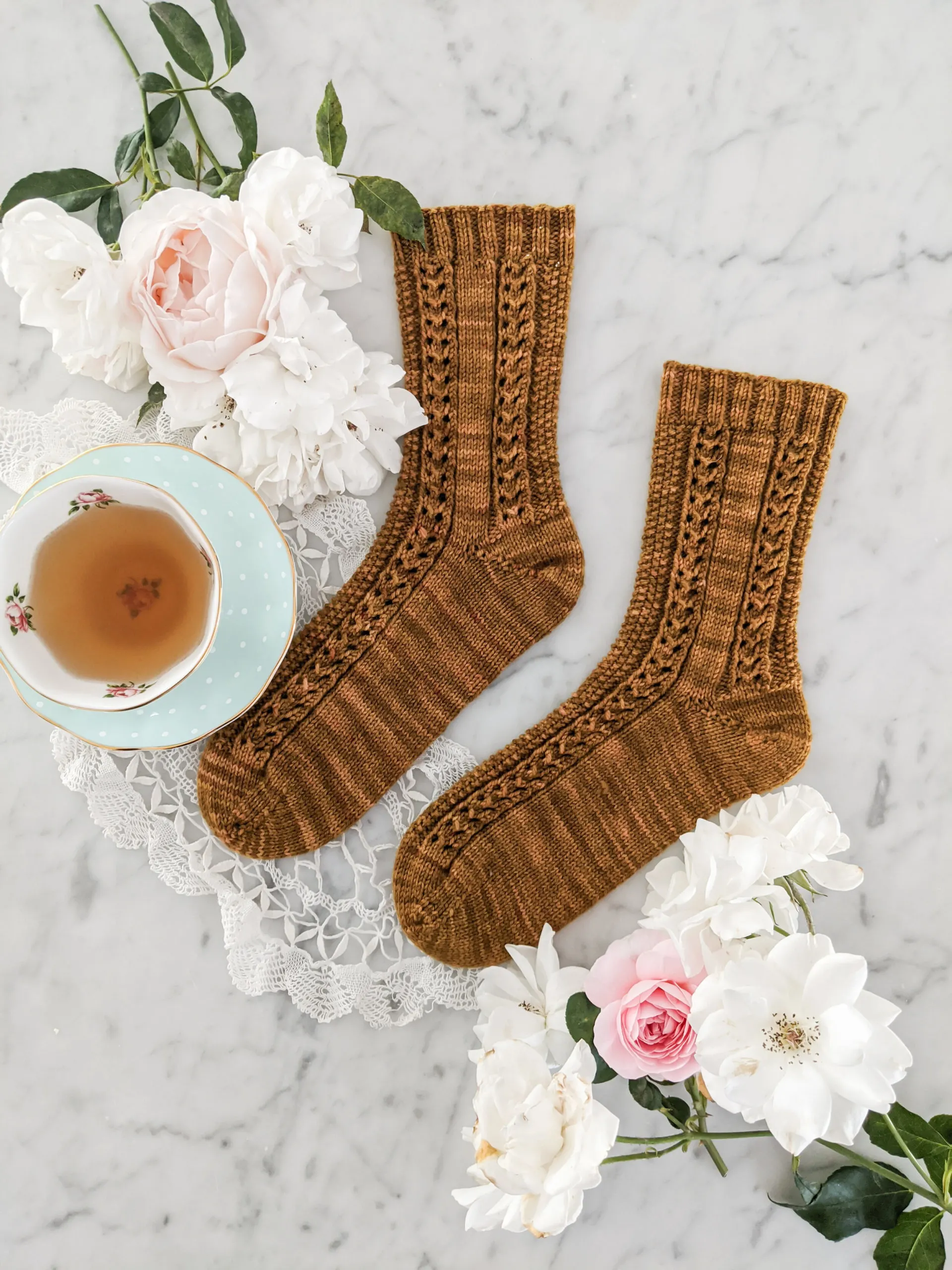
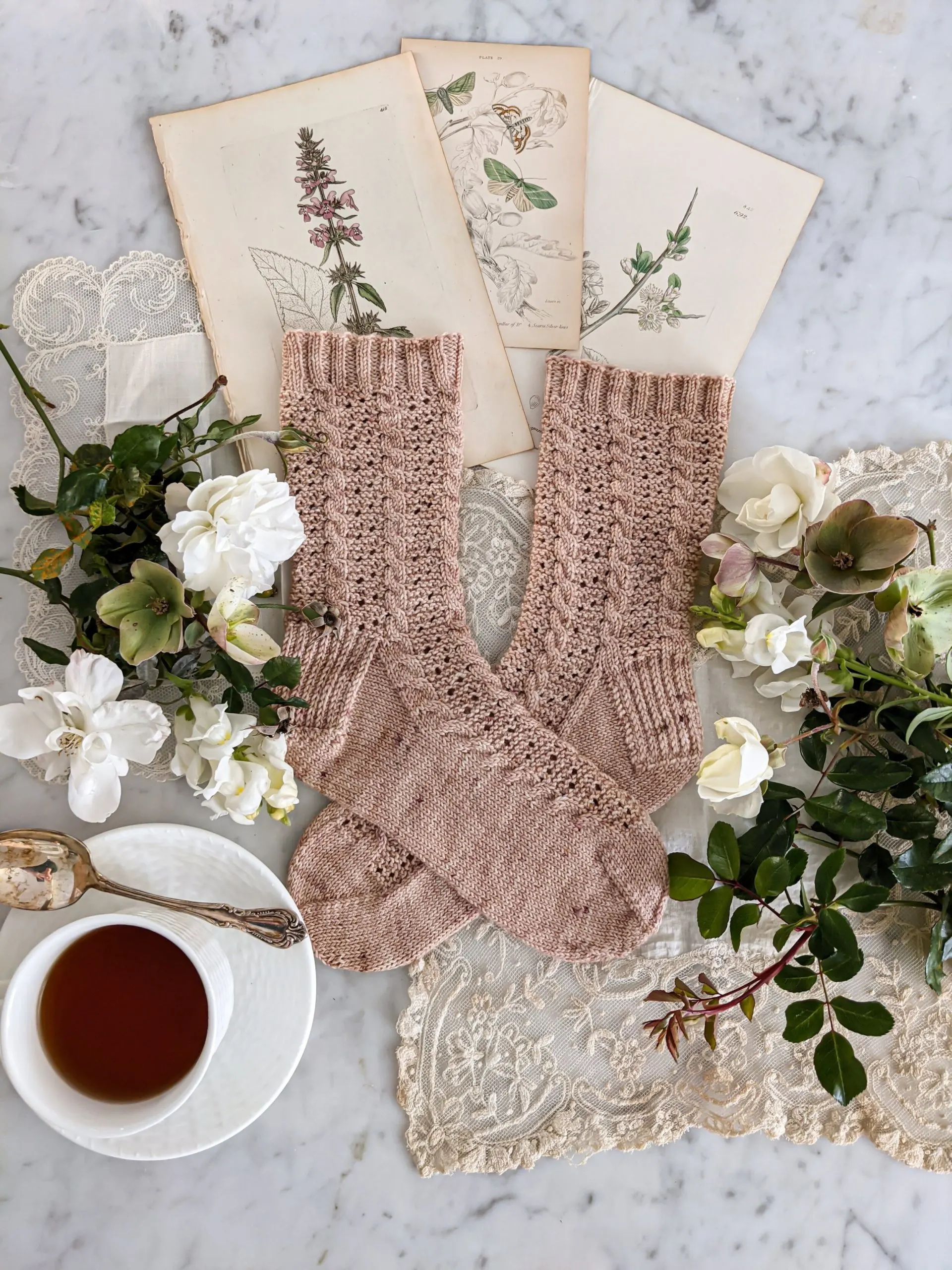
This is really helpful, but honestly I’m mostly stuck on which yarn to use and all the different sock constructions. I’ve heard you can’t just use any old yarn and that it should be sock specific. And. I keep hearing terms like gusset and heel flap and I have no idea what they mean.
You’re in luck, friend, because I have resources for you!
Here’s a blog post about how to pick the best sock yarn for different scenarios: https://www.abeeinthebonnet.com/blog/five-key-things-to-consider-when-choosing-a-sock-yarn/
And here’s a beginner’s guide for sock knitting that includes a page on the anatomy of a sock (that’ll help clear up some funky sock-specific vocabulary): https://abeeinthebonnet.kit.com/8fe3f773a3
I’ve made a note to myself to do a blog post on vocabulary for sock knitters, so keep an eye on that soon!