I am primarily a cuff-down sock knitter, in large part because I hadn’t found a good heel that fits me well and works with toe-up socks. Then, a couple weeks ago, my friend Aimee told me how much they love the fit of the Fleegle heel.

And, well, I’m always up for an experiment, so I decided to give it a try. Here’s my honest review of both the actual knitting experience and the fit of the Fleegle heel.
What is a Fleegle Heel, Anyway?
A Fleegle Heel is a type of heel designed for toe-up socks that is named for its creator, the knitting blogger Fleegle. Unlike many popular heels for toe-up socks, which are symmetrical at top and bottom and aren’t easily adjusted, the Fleegle Heel uses a gusset and then short-row shaping for the back of the heel. This gives the knitter some space to accommodate a higher instep and to make adjustments for wider or narrower feet or calves.
Unlike most heel flaps, which are rectangular, the back of the Fleegle heel is an inverted triangle with the widest part sitting at the top of your ankle and the narrowest part sitting down at the back/bottom of your heel. Here’s a photo showing the difference:

Test Driving (Er, Knitting?) A New-to-Me Heel
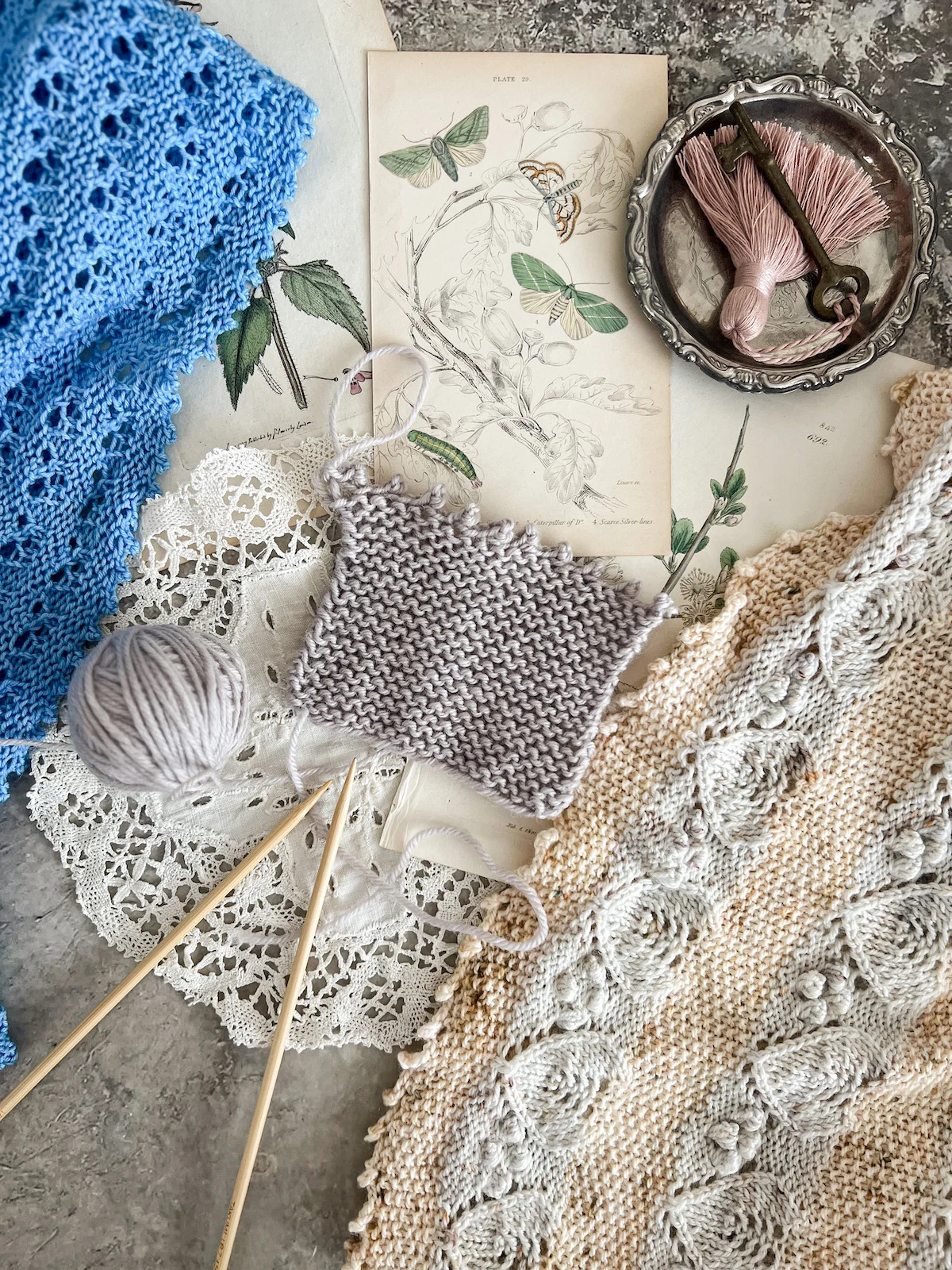
To make sure I achieved a good fit and understood the construction perfectly, first I just knit the heel. See that funny little cream swatch with speckles in the photo below? Yep, that’s my experiment Fleegle heel.

Now, to knit the heel, I followed the instructions in Fleegle’s original blog post from 20 years ago. These instructions are old and somewhat casual, so they may be a little confusing for a new sock knitter. Even as an experienced sock knitter, I found I struggled with the last couple steps for avoiding gaps at the end and had to take a break overnight. Yet another reason why I like knitting an experiment heel before putting it onto an actual sock!
Knitting the Fleegle Heel: Intuitive, Eventually
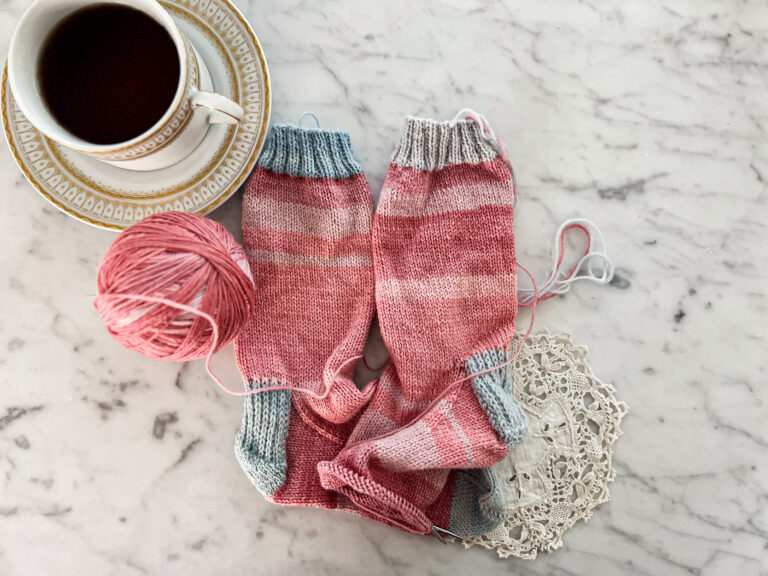
One of the nice things about having knit so many, many socks over the years is that when I want to experiment, I can isolate just that one variable. In this case, I knit my usual toe-up sock formula and only changed the heel.
I use Judy’s Magic Cast On and do 12 stitches per needle, then increase for a wedge toe (4 stitches increased every other round) until I have 30 stitches on each needle. After that, I switch to a tiny circular and knit until it’s time to start the heel.
This is where the experiment heel comes in handy again. Because each heel has a slightly different starting point when you’re working toe-up, I like to hold up my sock-in-progress against a finished sock that I know fits me well. Then I layer in the experiment heel. If the experiment heel plus the sock in progress are the right length, I know it’s time to start the heel. You can do measurements and math to figure this out too, of course, but this is my quick way that involves very little thinking.

Ultimately, once I had knit one experimental Fleegle heel and figured out the tricky spots, it was pretty easy to knit one on the real sock. You just increase to the right number of stitches using lifted increases on either side of the gusset. Then, when you have enough increases, you start working decreases the same way you’d turn a heel if you were using a heel flap and gusset. The formula is even the same!
Wearing the Fleegle Heel: Surprisingly Comfortable, but Not Perfect
My biggest beef with the short-row heels that are so popular on toe-up socks is that they do not fit me well. I have a high instep, and short-row heels tend to pull uncomfortably.
The Fleegle heel does have more height in it than short-row heels do, which is nice! It still tugs a tiny bit, but not enough to be a real issue.
But the back of the heel does feel kind of funny to me. I can’t figure out yet whether this is a genuine fit issue or if it’s just that I’m used to my heel flap and gusset. Honestly? It’s probably a little of both.

I think the source of the issue is that the bottom of the heel shaping has that narrow point. My heels tend to be a little wider, which is another reason I like my rectangular heel flaps. While there’s enough circumference in the heel at this point to fit comfortably around my foot, I’m not sure the actual shaping is the best for my foot.
That hasn’t stopped me from casting on the second sock, though! I am bound and determined to keep experimenting here. Stay tuned for more updates as I wear the Fleegle Heel out and about, try other heels, and keep a running log of which ones I like best.
Let’s stay connected!
Join my newsletter for 30% off all new releases, regular updates with helpful tips and tricks, first crack at registration for upcoming workshops, exclusive discounts, and more.
I’m on YouTube now and would love to have you join me there for regular project updates, technique tips, chats about goings-on in the knitting world, and more.
Prefer to read without ads? Join my Patreon, which starts at just $1 a month!
Join the A Bee In The Bonnet Facebook Group to participate in knitalongs and other fun community events
Come hang out with me on the A Bee In The Bonnet TikTok
Follow along on the A Bee In The Bonnet Instagram
Get inspired via the A Bee In The Bonnet Pinterest



The Periwinkle Dragon designs (Carolyn Lisle) has instructions for mini gussets to customize the fit of various heels and they work remarkably well!
As another high-instep knitter, I’m now devoted to the German short row heel in the palindrome sock on Knitty. I swear there’s a docking sensation when they go on – you’re not going to walk out of them or have them work their way down your foot when you’re wearing boots – and the EoP stitch gives good cushioning under and behind the heel. I do almost all my socks 2 at a time toe up, and I’ve subbed this heel in every pair since I got the hang of it.