Many knitters, especially when they first start out, find themselves fixating on mistakes in their knit projects. They will rip out and start over every time they make a small mistake, even when it means scrapping hours or even days of work.

As a knitter of almost 20 years, I’ll be honest: I ignore small mistakes in my knitting all the time. I encourage you to do so, too. Here’s why.
Small v. Big Mistakes – When Does It Matter?
A quick note before we dive in, because this is the internet and things can spiral out of hand quickly if I don’t include some caveats and points of clarification. First, this blog post is focused on small mistakes. If the mistake is a major one, you should probably go back and fix it.
So what constitutes a major mistake? The most important factor, I think, is whether it affects the functionality of the garment. If it leaves a gaping hole, generates a weak spot at a stress point, alters the drape in an unpleasant way, or something like that, then it’s a major mistake. I’d encourage you to take the time to fix that.
If it’s just an aesthetic mistake, though? Well, different knitters have different levels of tolerance for visible mistakes in their work. I encourage you, for your own peace of mind, to expand that tolerance to the point that you can at least ignore very minor mistakes like a single purl where there should be a knit in the underarm of a garment where nobody will see it anyway. One twisted stitch in the hem? It’s not the end of the world.
In other words, I’m not advocating for you to make knits that don’t serve you well, and I’m not advocating for sloppy knits. I’m just encouraging you to develop and maintain a healthy sense of perspective about the size and significance of various mistakes.
Okay, let’s dive in.
1. Perfection is Impossible, So Don’t Stress About It
It’s pretty common for knitters to focus on trying to make their knits look as perfect as possible. To certain extent, that’s an admirable goal. Polished, professional knits are a real accomplishment.
But there’s a difference between polish and perfection. Absolute perfection is more or less impossible most of the time, and holding yourself to an impossible standard is a great way to keep yourself from enjoying the thing you love.
In fact, there is a decent amount of scientific research showing that when you give somebody an impossible goal, they don’t feel empowered by it. The opposite happens. They start to feel overwhelmed, stressed, even depressed.
And let me let you in on a secret: many of those very polished-looking knits that you admire online or from afar actually have carefully hidden little mistakes in them.
Side note: I’ve got a whole blog post about how knitting helped me overcome some of my own perfectionism, if you’d like to read that, too.
2. Most People Can’t Tell the Difference
As the general public becomes further and further removed from the process of manufacturing clothing, they are less and less able to spot flaws in that clothing. Sometimes, that’s to their detriment. It means they have trouble identifying a weak seam in a garment or high-quality fabric, which affects their ability to buy durable clothing.
In the case of hand knitters, though, it can be a blessing. The average person will look at your knitting and just be impressed by it, no matter how many mistakes are in it. They’re simply amazed that you were able to take some pointy sticks and a bunch of string and turn it into something wearable.
The only people who would really notice small mistakes are other knitters, and the only circumstance in which their opinion really matters is if they are judging your entry in a competition. Otherwise, feel free to ignore them, too.

3. Going Back and Fixing Mistakes Can Create Bigger Problems
One of the biggest issues, especially for new knitters, is that going back to fix mistakes can sometimes lead to more dropped stitches, tension issues, and other problems that just make the situation worse. In other words, what might’ve started out as a small mistake that nobody would’ve noticed has ballooned into a big mistake that now you really do need to fix. What’s more, because the mistake has now grown into a big problem, it’s going to be harder to fix.
But even for experienced knitters, sometimes going back and fixing a mistake is just more trouble than it’s worth. You might have the technical skill, but the sheer amount of time involved in fixing the mistake isn’t proportional to how serious the mistake is.
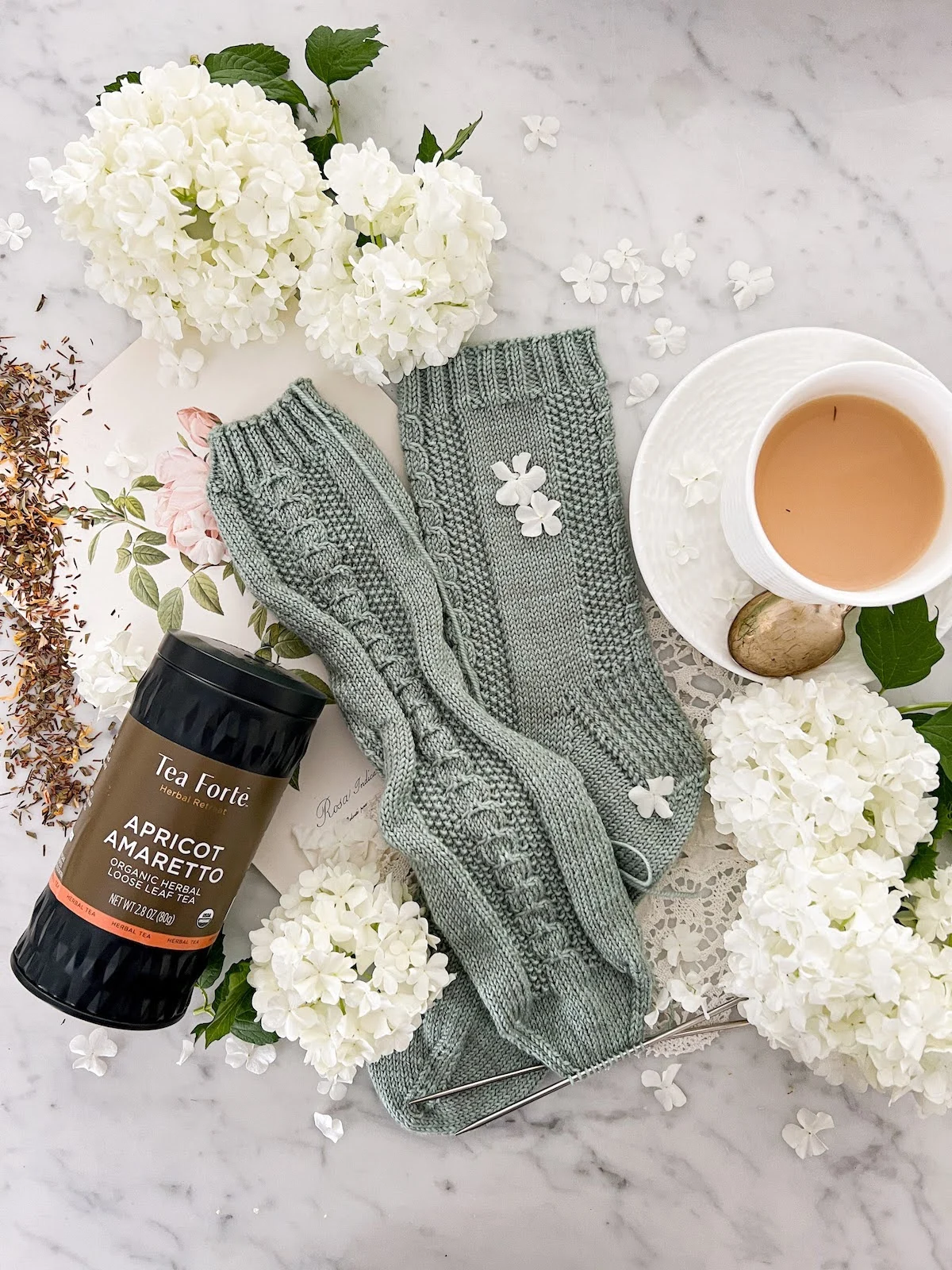
For example, I have a pair of socks with a few mis-crossed cables at the ankles. I didn’t notice the problem until I was well onto the gusset. While I could’ve dropped back to fix it, that would’ve been a very complicated surgery project. I decided I didn’t care enough, and that the mis-crossed cables were actually a funny story.
Besides, who would notice? Nobody should be looking that closely at my ankles, anyway.

4. Some Mistakes Disappear with Blocking and Time
Some of the most common mistakes involve uneven stitch tension, especially where one stitch is much looser than the stitches around it. Frequently, though, those visibly loose stitches become less so during the blocking process. That’s because the process of soaking your knits allows the yarn fiber to bloom and settle into place. This evens out a lot of tension issues.
The process of wearing your knit can also have an effect on how visible your mistakes might be. Remember, when we wear our finished knits, they stretch and move with our bodies. As they do so, existing spots of uneven tension get pulled into a more even alignment with each other.
In other words, sometimes, ignoring the mistake makes sense because it’ll fix itself.
5. A Change of Perspective Can Make Many Mistakes Seem Less Obvious
When we’re in the thick of things, even small mistakes can feel like horrible, obvious errors that everybody will notice and we won’t be able to live with. I’ve had a lot of those situations myself.
But it turns out that over time, I forget where the mistakes are in my knits. The more I wear them and love them, the less I notice even fairly significant mistakes like a mis-crossed cable.
That’s because, when we allow ourselves to have a little bit of distance from the mistake, whether that’s physical space or time of both, we frequently end up with a new perspective where we realize that the mistake isn’t as serious as we first thought it was.

6. Mistakes are the Record of Your Human Hands
One of the things I love most about hand knitting is the small imperfections that tell the story of who made the knit item. Tension issues, mis-crossed cables, reversed decreases, and so on are a sign that a human being made this project, and maybe even used this project to learn new skills that were a little bit out of their comfort zone.
As the world becomes increasingly more digitized and fast paced, these little traces of our humanity become ever more precious. I have a lot of thoughts on making by hand in a digital world and how important it is to keep doing that.
In the end, a little mistake here and there in your knitting isn’t a sign that you are a failure of a knitter. On the contrary, it’s a sign that you are a human who is growing and learning and trying new things. What a wonder that is.
Let’s stay connected!
Join my newsletter for 30% off all new releases, regular updates with helpful tips and tricks, first crack at registration for upcoming workshops, exclusive discounts, and more.
I’m on YouTube now and would love to have you join me there for regular project updates, technique tips, chats about goings-on in the knitting world, and more.
Prefer to read without ads? Join my Patreon, which starts at just $1 a month!
Join the A Bee In The Bonnet Facebook Group to participate in knitalongs and other fun community events
Come hang out with me on the A Bee In The Bonnet TikTok
Follow along on the A Bee In The Bonnet Instagram
Get inspired via the A Bee In The Bonnet Pinterest



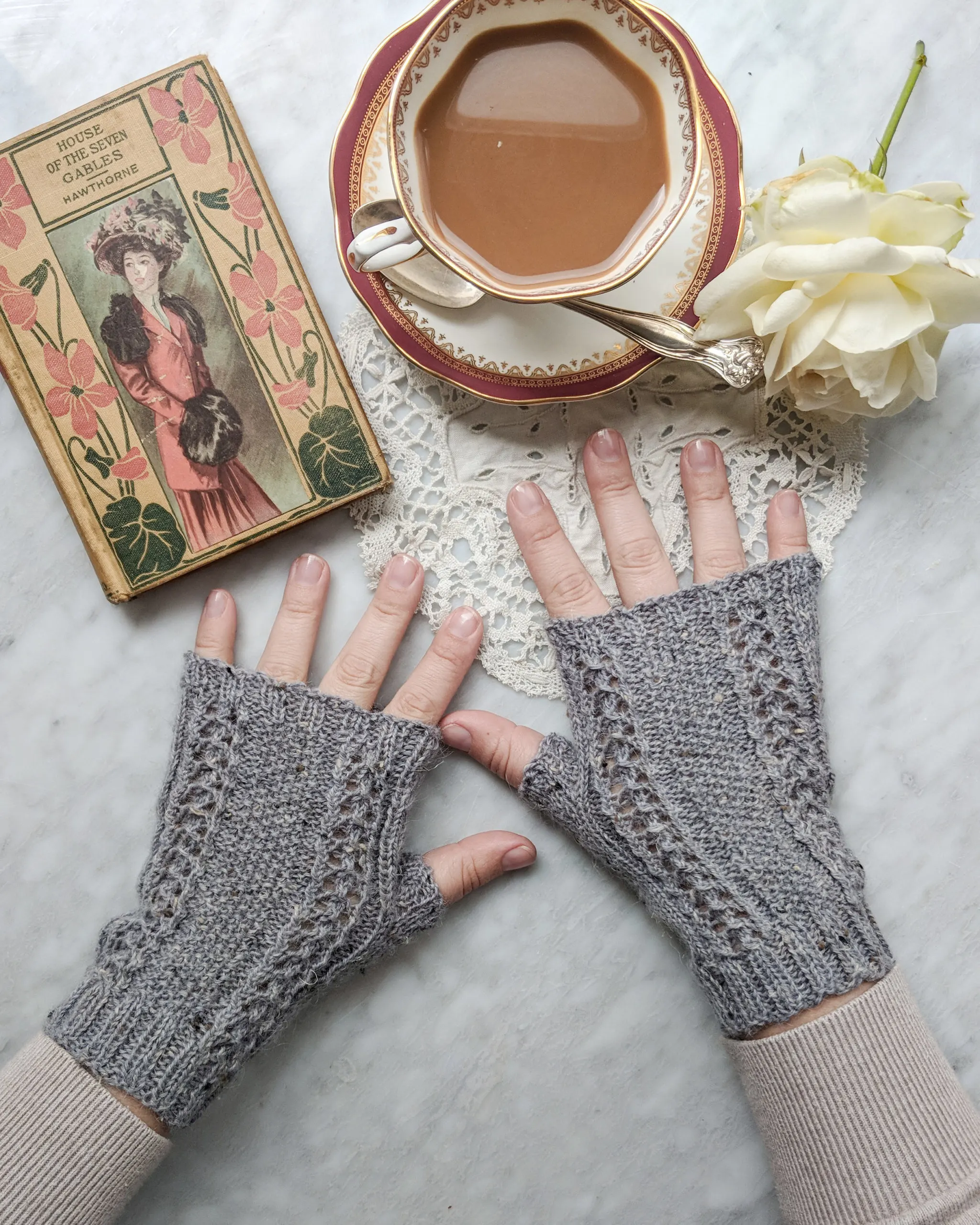


You are so right, when I first started to knit, I was a perfectionist…lol… not knowing I did not have to be. Well after a few years into my knitting journey , I met my knitting ppl, a circle of ladies who knit and we started going for coffee and knitting. With everyone chatting and sharing info and stories and pattern details of what worked and what didn’t, etc… I discovered most knitters start that way, then they learn to not see the mistakes, as you have said…no one but another knitter who has made that exact same pattern, eben knows we even made a mistake. I was like laughing at myself thinking why did I want to make it so perfect, nothing else in life is that way. Nothing is perfect. Learn to embrace the uniqueness of yourself. May I ask what is the name of those light blue fingerless mitts? thx
I agree wholeheartedly! My journey was similar. The blue mitts are the Arroyo Verde Mitts, and I love that stitch pattern so much that I also made a pair of socks out of it (Creme Brulee Socks) and turned it into an ear warmer (tutorial here: https://www.abeeinthebonnet.com/blog/how-to-knit-an-ear-warmer-using-any-sock-pattern/).