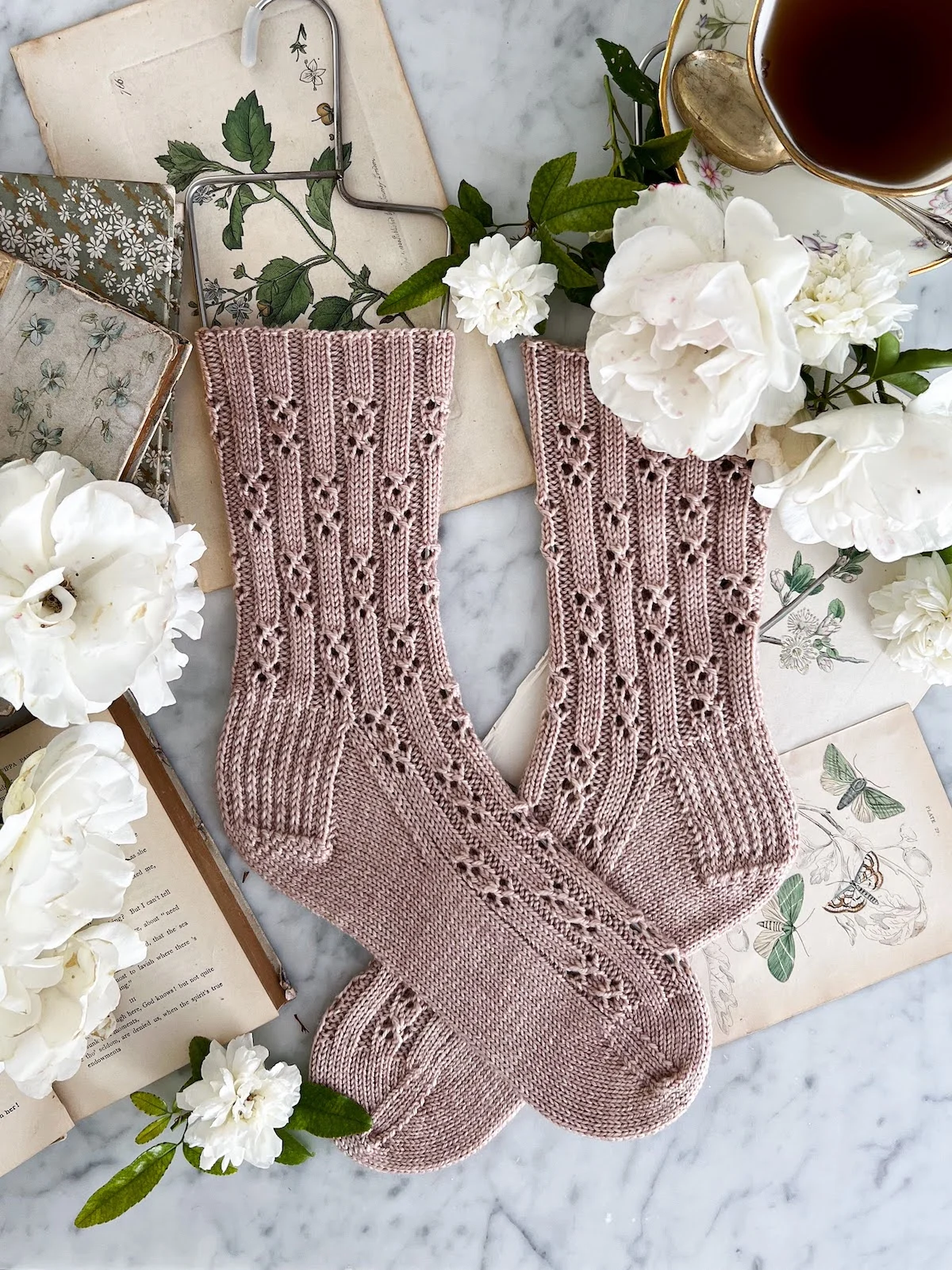
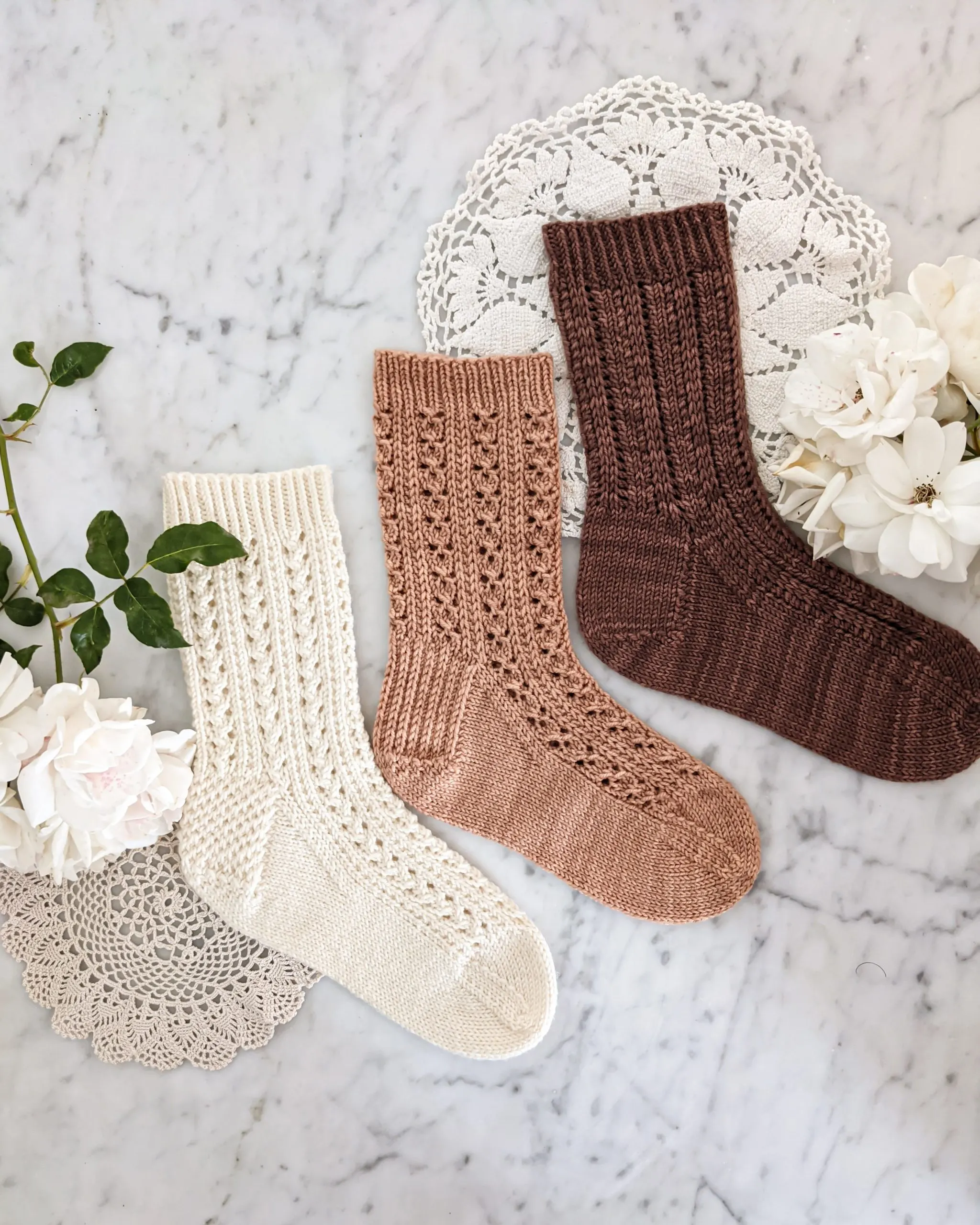
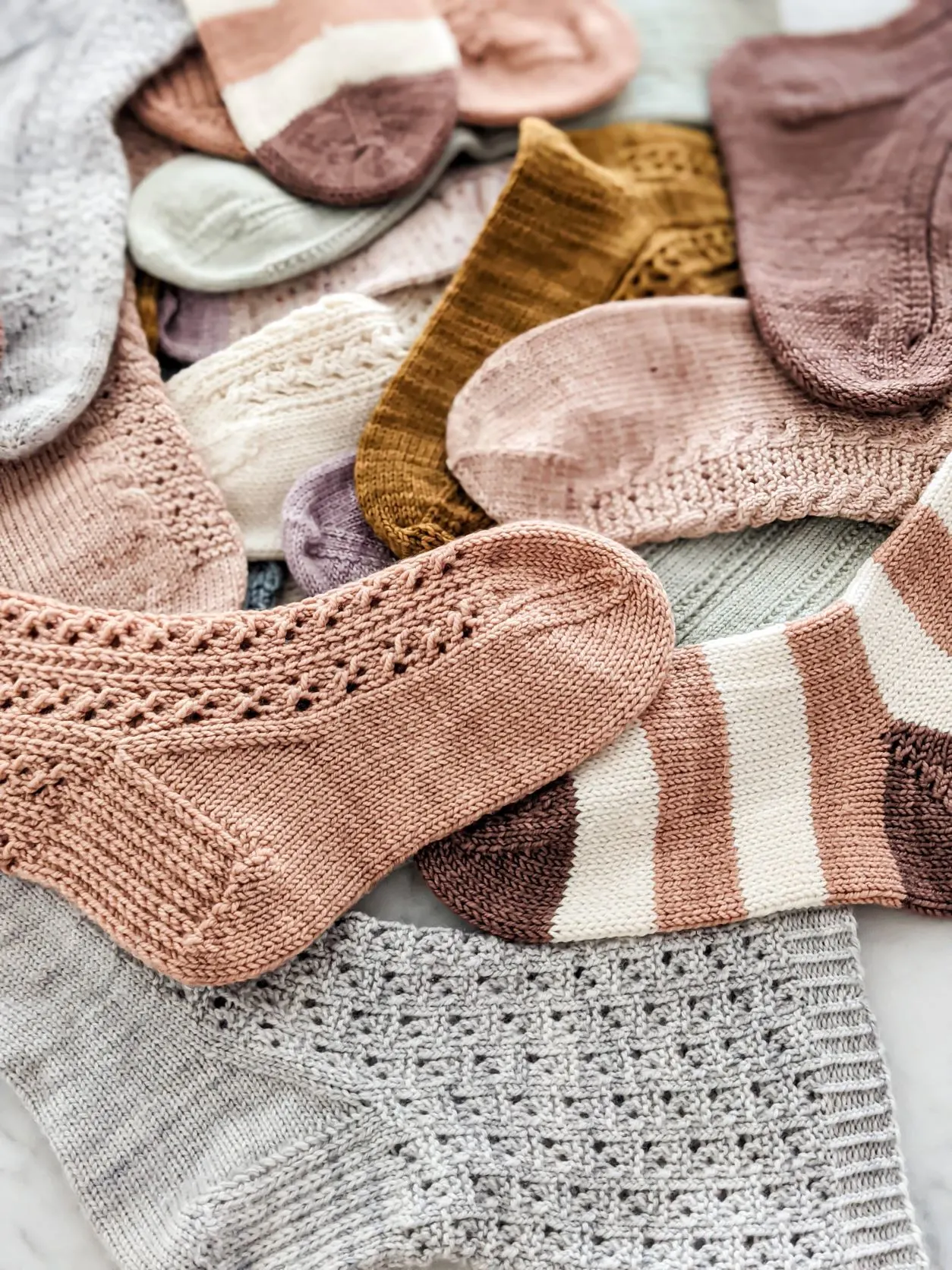
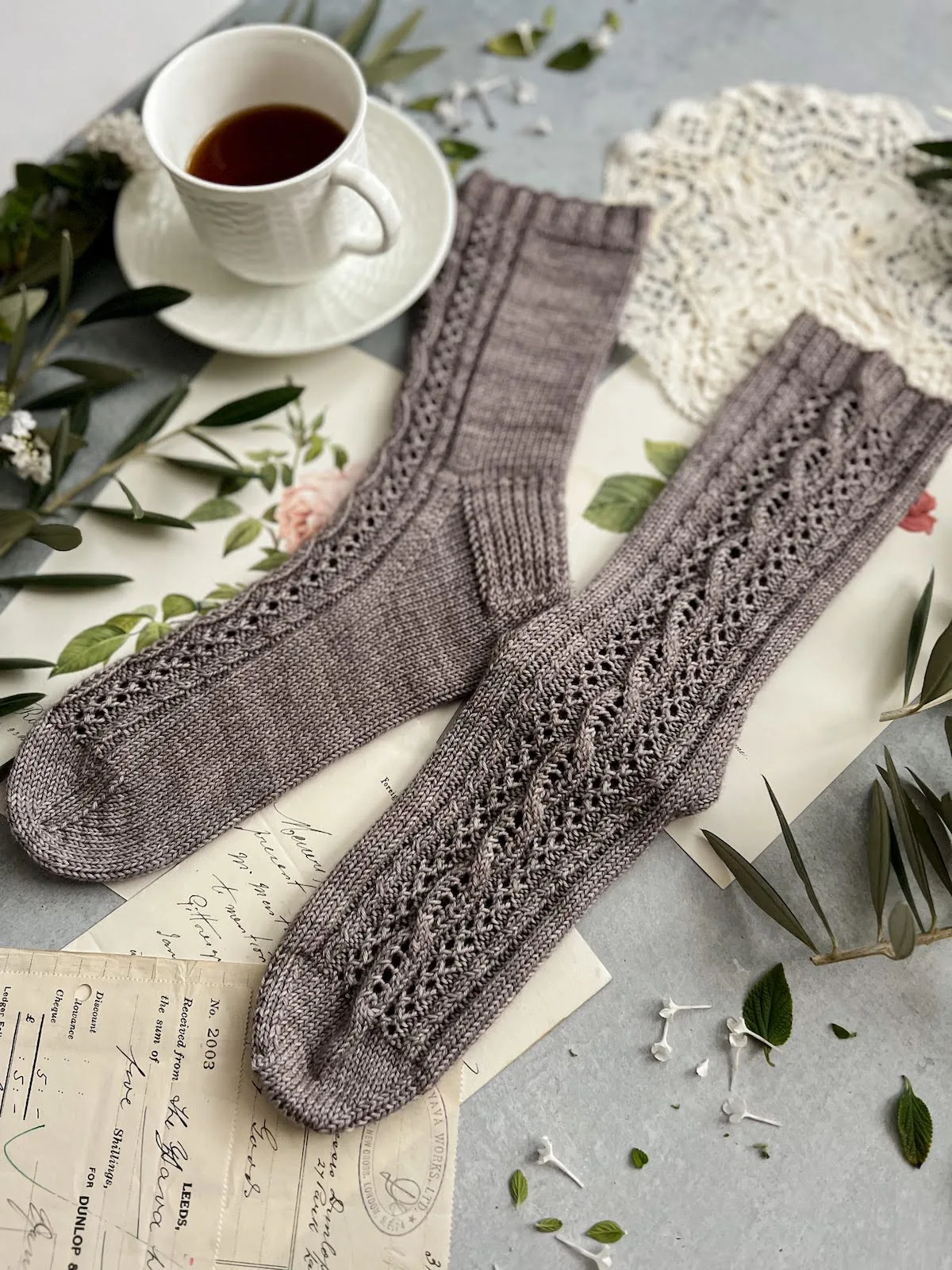
One of the most common questions I see in sock knitting forums is how to make handknit socks last longer. There are five common culprits for a handknit sock that develops holes after just a couple of wears. If you are experiencing some issues with your handknit socks falling apart quickly, use this list to troubleshoot.

Common Culprit #1: The Wrong Yarn for the Socks
Choosing the right sock yarn is part art, part science. When you have the right yarn, your socks will be warm, squishy, and durable. When you have the wrong yarn, your socks will sprout holes easily, droop, tug in weird spots, not keep your feet warm, or otherwise not do their job as well as you’d like them to.
There are a lot of factors that go into choosing just the right sock yarn. In fact, there is enough to consider in that process that I have written an entire blog post on how to choose the right sock yarn. Take a gander at that post and then evaluate the yarn you have used for the pair of socks that is falling apart. If the yarn has some structural issues, that could be the reason your socks are falling apart.
If not, let’s move on to common culprit number two.

Common Culprit #2: Loose Gauge
Gauge affects the durability of your socks. A loose gauge will generally be less durable than a tighter gauge.
Most modern sock patterns are written at a gauge of 7 to 8 stitches per inch. For many of us, that is tight enough, but if you tend to walk a lot in your socks or otherwise put them through pretty heavy wear, you may want to try a tighter gauge.
For increased durability, many sock knitters like a gauge of nine or even 10 stitches per inch. To achieve a tighter gauge, you will need to go down needle sizes until you reach the gauge you want. Note that if you go down needle sizes but also go to a finer yarn, you may end up canceling out the effect of the tighter gauge because the yarn will be thinner.

Common Culprit #3: Fit Issues
If your gauge is nice and tight, and your socks keep wearing out in the exact same spot, you may have a fit issue. The most common place I see this problem is in the heel, and the most common fit issue here is that the person has a high instep but has used a heel construction that does not give enough space.
A short-row heel, including the very popular Fish Lips Kiss heel, generally does not have as much room in it as a heel flap and gusset construction. Even though these short-row heels tend to be easier to knit for a lot of knitters, the trade-off is that the fit will not be as good for a significant portion of the population.
If your socks constantly sprout holes at the heel, take a look at how the sock fits there. If your stitches are nice and comfortable elsewhere on the foot but are stretched out across the heel, that is a sign that you have a fit issue. You do not have enough depth in the heel of your sock to accommodate for the dimensions of your actual foot. You’re going to need to try a different heel technique.
While you can add some additional depth to short row heels by adding a mini gusset, I very strongly recommend trying out the heel flap and gusset because it is the most customizable sock heel. You can add width, or height, or both. You can also remove width, or height, or both. It is much harder to do that with a short row heel.

Common Culprit #4: Anatomical Variations
Different people have different strides, and depending on how we land on our feet, we may end up putting significant pressure on specific points.
For example, I tend to land on the outside edge of my heel and then roll inward. Many other people land on the inside edge of their heel and roll outward. This means that when you walk, you are generating significant friction on just that particular point of your sock.
Along with your gait, you may have elements of your specific foot anatomy that are causing more wear on particular spots on your stock. For example, hammer toes might cause extra pressure at the spot where the joint below your toe juts out.
If your yarn is good, your fit is good, and your gauge is good, it could be that your gait or your foot shape is just putting additional strain on one spot of the sock. If that’s the case, then your best choice is to reinforce that spot.
Common Culprit #5: Foot Condition
One last factor that can cause a sock to wear out more quickly is very rough feet. Think of it as the equivalent of rubbing sandpaper against your finished socks all day long.
While some of this can be mitigated by reinforcing your socks, you can also help extend the life of your socks by taking good care of your feet. Check out this blog post with some helpful tips.

Let’s stay connected!
Join my newsletter for 30% off all new releases, regular updates with helpful tips and tricks, first crack at registration for upcoming workshops, exclusive discounts, and more.
I’m on YouTube now and would love to have you join me there for regular project updates, technique tips, chats about goings-on in the knitting world, and more.
Prefer to read without ads? Join my Patreon, which starts at just $1 a month!
Join the A Bee In The Bonnet Facebook Group to participate in knitalongs and other fun community events
Come hang out with me on the A Bee In The Bonnet TikTok
Follow along on the A Bee In The Bonnet Instagram
Get inspired via the A Bee In The Bonnet Pinterest